Tuesday, June 2, 2015

A Brief Fashion History Part 1: Victorian vs. Edwardian

The Age of Queen Victoria

Women's fashion first came into light during Queen Victoria's rule from 1837-1901, otherwise known as the Victorian Age of fashion. Before this point, men's fashion was at the forefront. This time period is known for two distinct silhouettes: the hoop skirt and the bustle. I won't go into lengthy details as to all the subtle changes that happened during this 60+ year time period. If you would like to read more, Truly Victorian has an array of information that goes into much greater detail.

  • The Hoop Skirt - a large full length skirt with a close fitting bodice. Think of the southern belle or The Civil War (c. 1860s).
 

Laced up corsets, petticoats, bloomers, camisoles, and a large bird-cage like hoop all formed the fundamental shape of this look. These hoops were often made of wire and whalebones. Everyday wear would just consist of free flowing petticoats, while more formal events would require the hoop skirt.


  • The Bustle - In the early 1870s, silhouettes started to slim down with a slender front and the majority of fabric and drape were moved to the back of the skirt. The cage hoop skirt was transformed to a smaller version of itself. This was the only undergarment to change.
This style continued to evolve up until the very early 1900s with silhouettes becoming slimmer and slimmer.
 
 
The Age of King Edward VII 
 
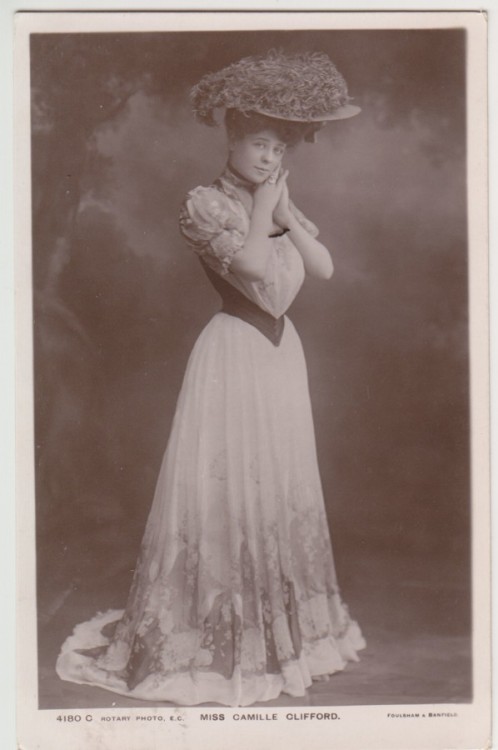
The Edwardian period was marked with the crowning of King Edward VII and ran from 1901 until roughly 1919. King Edward died in 1910, and there is some debate as to when this trend ended. Some believe it was around the sinking of the Titanic in 1912, while others believe it to be the start of World War I in 1914. Others believe it to be as late as 1919. For our purposes here, I'm sticking with the date of 1919.
There are two distinct silhouettes in this short period of time: The formation of the S-bend corset, and the later empire waist column.  

  • The S-Bend Corset - as the bustle accentuated a woman's rear, this corset would be tightly laced at the waist, forcing the hips and rear back and the bust was pushed forward. Also referred to as 'the pigeon', his silhouette was accentuated by very high necklines and looser fitting bodices and blouses. Thankfully, for most women, this trend only lasted until the late 1900s to very early 1910s.
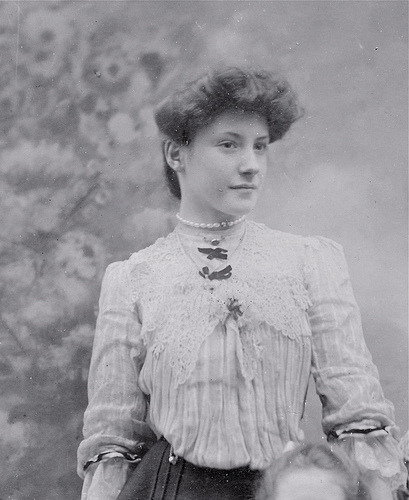


  • The Empire Waist Column - lastly, this style was formed with a longer corset, like down to the knees lower! Necklines were dropped and waistlines were raised. The silhouette was the most slender it had ever been.


In the next segment, I'll discuss the period and differences between the Age of Art Nouveau and Art Deco which will cover The Roaring 20s!


Monday, June 1, 2015

Antique and Vintage Estate Sale Finds - May 30, 2015

I LOVE LOVE LOVE a good estate sale! We had a nice one in Canyon Lake over the weekend with lots of mid-century and older items up for grabs. I'll be re-selling some of these items, and some items I think I may keep.

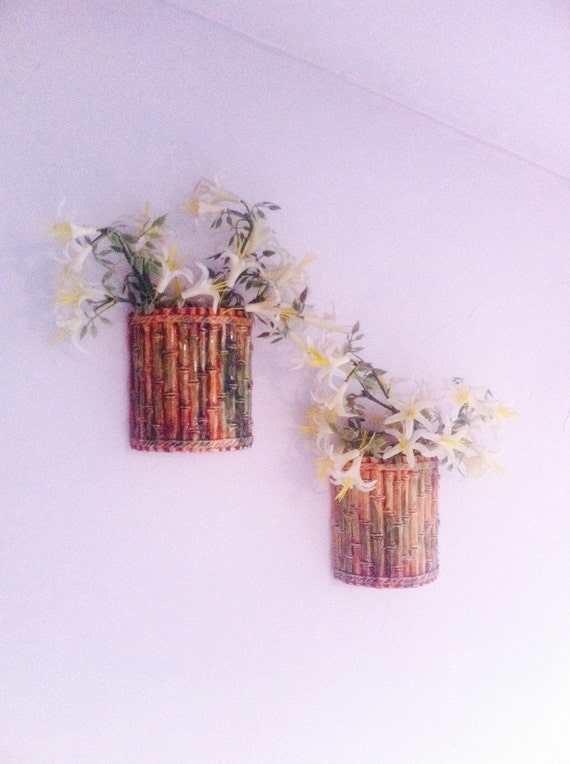
These are some 1960s ceramic sconce vases that are super kitschy! You can find them for sale here.
Made in Japan, they would be a wonderful addition to any tiki or safari themed room.


I always look for old sewing notions, patterns, and fabric when I attend one of these events. This is a lovely little antique brass pin cushion from the late 1890s to early 1900s. I haven't decided if I'm letting this one go.


Another fabulous find was this 1940s/1950s Mexican hand painted, hand carved batea wood bowl. Despite the picture, the colors are vibrant and beautiful!! I'll be listing this one in the near future, and update here when I do.


I have always loved interesting clocks.This is an awesome 1950s atomic style bed side clock made by The Hollis Press and Underwriters Laboratories. UL was known for lamps and lighting, so it should be no surprise that it even has a night light option that illuminates the bottom right rectangle. This will most likely be a keeper, but I had to show it off!!


Interesting kitchen items are also a passion of mine. Often, a woman's kitchen was a reflection of her skill and taste. I know many women would find such ideals as degrading or anti-feminist, but I find it quite the opposite. A woman could express creativity in the kitchen, and it was her domain to wield and foster control of her household.

These are a few of items I was able to snag

Here is a Betty Crocker recipe box from 1971. The recipe set is only half complete, so I will not be listing it. Nonetheless, my husband will be most happy with my attempt at some of these goodies. I have seen some of these boxes on Etsy, and if interested, you can find a complete set in a variety of colors very reasonably (avg $20)!


Another find was this anodized aluminum rolling pin. It is a very nice weight, and would look great in any stainless steel style kitchen! It is currently for sale here.


This is one of a set of four late 1960s serving trays. Loving the daisies! Now listed here!
 

A lot of home décor and house hold items in the early to late 1960s were made in Japan. As such, items from this time period had Oriental influence and motifs. I'll expand on this trend in a future post. For now, this little vase is a great representation of its time period. I will update as soon as this item is listed.
 

The Mod style emerged in the mid 1960s and lasted until the very early 1970s. A large part of this style were items made out of the dark wood walnut. Again, this will be expanded on in a future post. This little ashtray caught my eye as it was a vacation souvenir. Elaborate vacations, such as that to Jamaica, weren't as common as they are today. Most people would take road trips because it was more affordable and accessible rather than flying to a destination. This little ashtray even has a Jamaican half penny coin from 1940 embedded in the wood.
 
I hope to have most of these items listed within the month. I will update each when I do. If you have any questions about one of these items, feel free to comment below.

Sunday, May 31, 2015

Vintage vs. Retro vs. Antique

It can be sometimes confusing on these terminologies. I know this because I see items erroneously listed and advertised all the time! In all honesty, it drives me bonkers. Not to mention, the potential buyer could be purchasing an item they think is one thing that it clearly is not.

In very simple terms, these are the distinctions:
  • Antique - an item that is no less than 100 years old
  • Vintage - an item that is newer than an antique, but no less than 20 years old
  • Retro - simply put, it is a wink to a past style but is much more current than the decade that influenced it.
As you can see, vintage items and antiques have very specific timelines. An item can be one or the other, but not both.

On the other hand, an item can be vintage and retro at the same time. A perfect example of this was the 1980s. Many dresses were clearly influenced by the styles of the 1940s with peplums, puff sleeves, and that broad "Joan Crawford" shoulder silhouette. Here are some perfect 1980s examples from my shop, as well as a comparison dress from the 1940s:


The print, high front neckline with a low back, and bodice extended sleeves are all influential of those film noir movies of the 1940s. You know...the ones where the desperate woman walks into a Private Investigator's office with more sexual tension than smoke filling the room. More pictures and description can be found here.

This one has a wrap style bodice, asymmetrical layered skirt, and puff sleeves which are all a perfect representation of a 1940s version of a tea dress. You can see more pictures here.

Retro style and influence popularity is always changing. Sometimes these styles are mixed and matched and become a whole other craze onto itself. Pin up and Rockabilly go hand in hand. They are influenced by 1940s hair styles, and fashion from the 1940s to mid 1960s. To the average person, it may be difficult to spot a vintage dress from a much newer, retro dress. When shopping on line such as eBay or even Etsy, look for terms such as "1950s style" or "1950s influenced".

In a future post, I will explore this style more with fail-safe ways to figure out if a dress is actually vintage, or just a year or two old.